These habits can delay the onset of dementia by years
More and more research points out that maintaining brain health is not down to a single decision or a short-term lifestyle change. It is much more about how mentally active, curious, and open to new experiences we remain throughout our lives. A recent, large-scale study confirms this: certain everyday activities can delay the appearance of dementia by up to years.
What did the researchers examine?
Experts analyzed data from nearly 2,000 older people as part of a long-term study. At the start of the study, the participants were not living with dementia, and they were followed for years in their own home environments.
One special feature of the research was that it did not only take into account current lifestyle but also the mental activity accumulated throughout a lifetime. To do this, they used a so-called “cognitive enrichment” indicator, which covered three main life stages. The first life stage examined was childhood and youth, where they looked at things like what learning opportunities were available, whether there were books at home, or if someone read stories to the child. In adulthood, they examined how often someone participated in mentally active activities and what resources they had access to. In old age, they looked at how regularly someone kept their mind active (reading, writing, games, etc.). This comprehensive approach helped reveal how mental activity affects brain aging.
Surprising results
The results were clear: for those who led a more active mental life throughout their lives, the risk of cognitive decline was significantly lower.
- Nearly 40% lower chance of developing Alzheimer’s disease
- Mild cognitive impairment appeared more than one-third less often
- Symptoms appeared years later:
- In the case of dementia, by up to 5 years
- In the case of mild cognitive impairment, by up to 7 years later
This means that mental activity can not only reduce the risk but also delay the onset of symptoms. Interestingly, better cognitive performance was observed even in those where brain changes characteristic of Alzheimer’s disease were later found. This suggests that an active mental life can make the brain more “resilient.”
What could be in the background?
According to experts, lifelong learning and mental activity build what is called “cognitive reserve.” This is a kind of protective mechanism that helps the brain adapt better to age-related changes or illnesses. Put more simply: the more we “use” our brains, the more flexibly they can function, even if some damage is already present.
What does this mean in everyday life?
The most important message is that you don’t have to think of extraordinary things. Protecting the brain depends on small but regular habits. For example:
- Regular reading
- Learning new skills (e.g., learning a language, a hobby)
- Board games, logic tasks
- Cultural programs (museums, exhibitions)
- An active interest in the world
Even simple opportunities like using the library or being curious about a new topic matter.
How can this be achieved in everyday life?
Regular Readung
How to build it into the routine?
- 10–15 minutes a day is enough (e.g., with morning coffee or before going to bed)
- Always have a book “within easy reach” (on the nightstand, in a bag)
Practical ideas:
- Choose books with short chapters, as this gives a greater sense of achievement
- Read out loud sometimes, as this activates more brain areas
- Keep a “reading diary” (a few sentences about what we read)
Extra tip: If it is hard to concentrate: use an audiobook and the physical book together.
Learning new skills
How to start?
- Don’t start with big goals, like speaking Spanish fluently, but in small steps.
- 5–10 minutes a day counts too.
Practical examples:
- Language learning: learning 5 words a day, or learning 2 common conversational sentences.
- Learning a new hobby: drawing, gardening, cooking based on new recipes.
- Digital skills: trying out a new app.
How to make it a habit?
Tie it to an existing habit:
- 5 minutes of learning after breakfast
- 10 minutes of practice before evening TV
Important: The “challenge” is the key; it should be a little difficult, but not “suffering through learning.”
Board games, logic tasks
Simple integration:
- 2–3 times a week is already effective
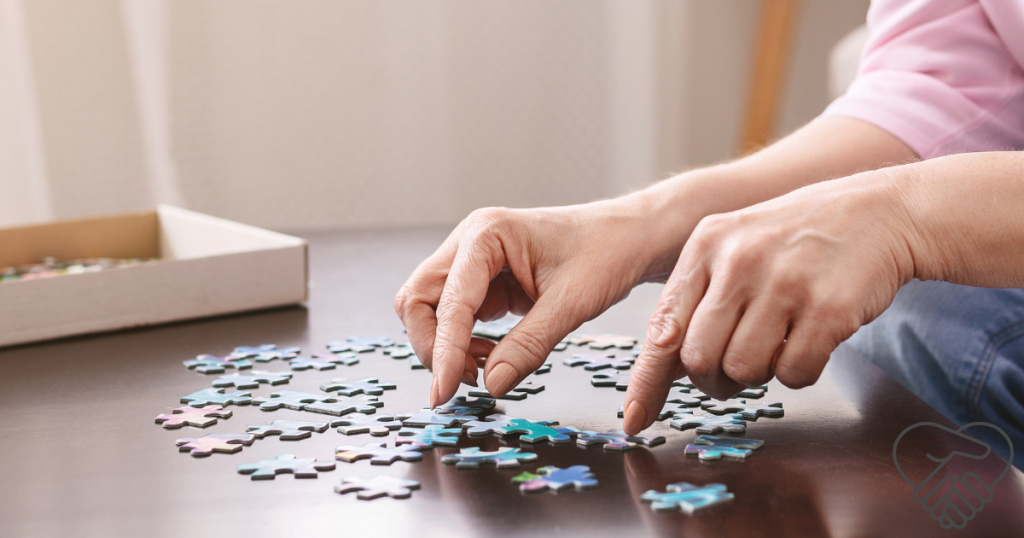
- It can be done alone (puzzles, Sudoku)
Home ideas:
- 1 crossword puzzle a day
- Memory card games, board games with the family
- Playing cards, chess, dominoes
How to make it a habit?
“15 minutes of play after dinner”
Extra:
- Rotate the games so they are constantly exposed to new stimuli
- Learn to play a new game from time to time
Cultural programs
How to make it regular?
- Even 1 program per month matters
- Plan it in advance (like an “appointment”)
Practical examples:
- Visiting a museum
- Exhibitions
- Theater or concerts
- Online virtual tours
Simpler version for weekdays:
- Watching a documentary
- “Exploring” a painting or a topic online
The point is to have a new experience and then reflect on it a bit later. Analyze it, find its “message,” recall the parts you liked, and think about why you enjoyed it so much.
Active interest in the world
What does this mean in practice?
It is not just about “consuming” information, but thinking about it. Reflection, analysis, chatting with friends, being present in the moment and the experience.
Simple daily habits:
- Read a news story, then think: “What do I think about this?”
- Talk with others about current topics
- Ask questions (why? how?)
Practical ideas:
- Daily “new information” habit (e.g., an interesting fact)
- Listening to a podcast while walking
- Journaling: what did I learn today?
How does this all come together in a day?
If someone says they don’t have time for this, the following short summary helps show how to find time for yourself. It’s not about how much we do at once, but whether we do it regularly. 10 minutes a day is better than 2 hours once a week.
You don’t have to squeeze everything into one day; an “brain-friendly day” could look like this:
- Morning: 10 minutes of reading
- After lunch: 5 minutes of language learning
- While walking: a podcast
- After dinner: 15 minutes of a game or puzzle
- Evening: a short review (what did I learn today?)
Never too early – and never too late
One of the most important lessons from the research is that prevention is not tied to a specific age.
- A stimulating environment in childhood can lay the long-term foundation for brain health.
- Activity in adulthood maintains and strengthens this foundation.
- In old age, introducing new habits can still have a significant impact.
In other words, every stage of life matters — and every small step adds to the later results.
What we do for our minds today truly pays off years later.
Dementia prevention does not depend on a single “miracle method,” but on how we live day by day. An active, curious lifestyle open to learning can slow down brain aging and delay the appearance of symptoms by up to years. Our brains need constant “exercise,” but this exercise can be enjoyable. Reading, playing games, learning, or a good conversation can all help us preserve our mental freshness for longer. The message is simple yet powerful: what we do for our minds today truly pays off years later.
7-day brain refresher plan to maintain mental freshness
How to use this plan?
You don’t have to follow it perfectly — it can be adapted flexibly to personal needs. Everyone has different daily habits, so the plan below is just a guide; everyone fits it into their day where it works best. If you miss a day, no problem. The key is consistency, and this consistency isn’t broken by skipping one day. After 1 week, you can start again or vary the plan.
Day 1 – “Easy Start”
- 10 minutes of reading (book or article)
- 10 minutes of puzzles or Sudoku
- Talk to someone about a topic you read
- Focus: starting the brain with simple tasks
Day 2 – “Learn something new”
- Learn 5 new words in a foreign language
- Listen to a short podcast
- Write down 3 new things you learned
- Focus: activating new neural pathways
Day 3 – “Movement and thinking”
- Listen to music or a podcast while walking
- Try to clap or dance to the rhythm
- 10 minutes of memory games (e.g., memorizing a list)
- Focus: body + brain working together
Day 4 – “Creative day”
- Draw, color, or make something by hand
- Try a new recipe
- Think about what was new about it
- Focus: creativity and problem-solving
Day 5 – “Connection”
- Meet a friend or make a phone call
- Play a simple board game
- Talk about old memories
- Focus: social activity (very important!)
Day 6 – “Discovery”
- Watch a documentary or an exhibition (can be online)
- Learn something about a new topic (e.g., history, nature)
- Focus: maintaining curiosity
Day 7 – “Summary and play”
- Write down what you learned this week
- Choose a favorite game or puzzle
- Listen to music that makes you feel good
- Focus: repetition + positive experience
The key: variety + consistency + enjoyment.
If you enjoy what you do—whether it’s a favorite board game, reading material, craft activity, or podcast topic—it’s more likely to stay a daily habit. Our brains appreciate the care, and it doesn’t require hours of “training.” A few conscious minutes a day can be enough to preserve your mental freshness in the long run.
Important Disclaimer
The information and advice presented on this website and in this article are for informational purposes only. They do not constitute a medical diagnosis or individual therapeutic recommendations. The operator/author of the website assumes no liability for any direct or indirect damages, health issues, or misunderstandings resulting from the use of this information. Everyone applies the described methods at their own risk. Please consult your physician before making any lifestyle changes or applying any complementary therapies.
About the Author
Suzanne Sandwiese – Dementia Caregiver, Mental Health Assistant
I have more than 12 years of practical experience in caring for elderly people and patients living with dementia. My goal is to translate knowledge about dementia into understandable, practical advice that can be applied in daily life, thereby helping families live together with the disease. As the author of several professional books and the founder of a popular Facebook page, my mission is to provide clear and, above all, usable guidance to all those who care for loved ones living with dementia.
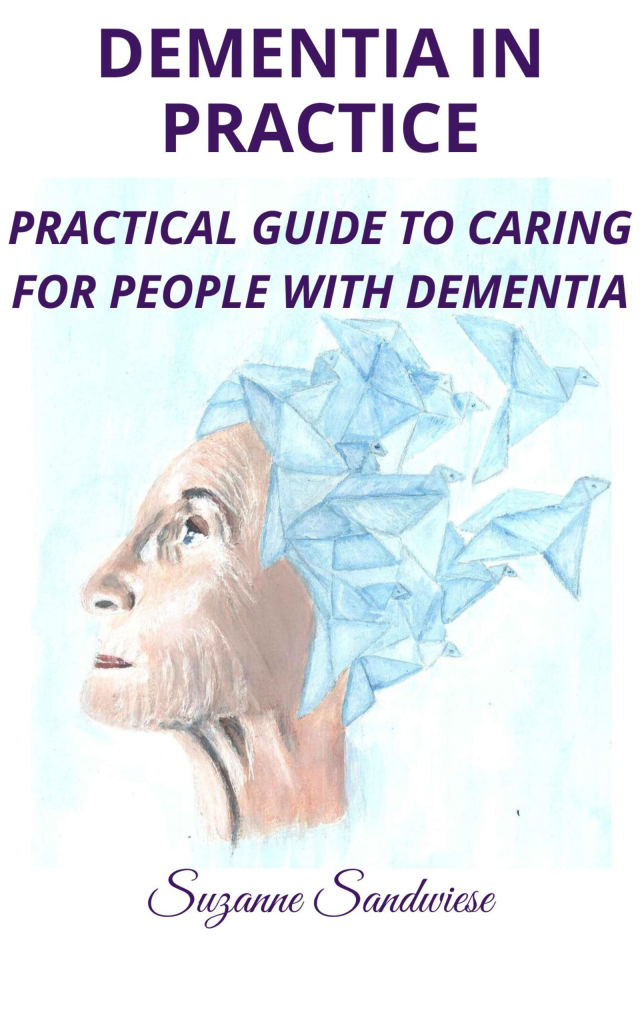
My books – Dementia in practice
Looking for practical, hands-on guidance for caring for a loved one with dementia at home? This comprehensive guide offers real-world advice and strategies to help you navigate everyday caregiving with confidence.
Struggling with stress-free bathing, hair washing, or nail care for a person with dementia? Discover practical, empathetic techniques to turn daily hygiene routines into calm and dignified experiences.
Managing incontinence in dementia care can feel overwhelming, but the right approach makes all the difference. Learn practical, experience-based steps to maintain dignity, comfort, and routine at home.
Agitation and aggressive behaviors in dementia are often cries for help rather than intentional actions. Discover practical, practical-proven techniques to de-escalate difficult situations and create a peaceful environment.
Apathy, anxiety, and mood changes are among the hardest non-verbal symptoms of dementia to navigate. This practical guide helps you understand these emotional challenges and offers actionable steps to support your loved one.