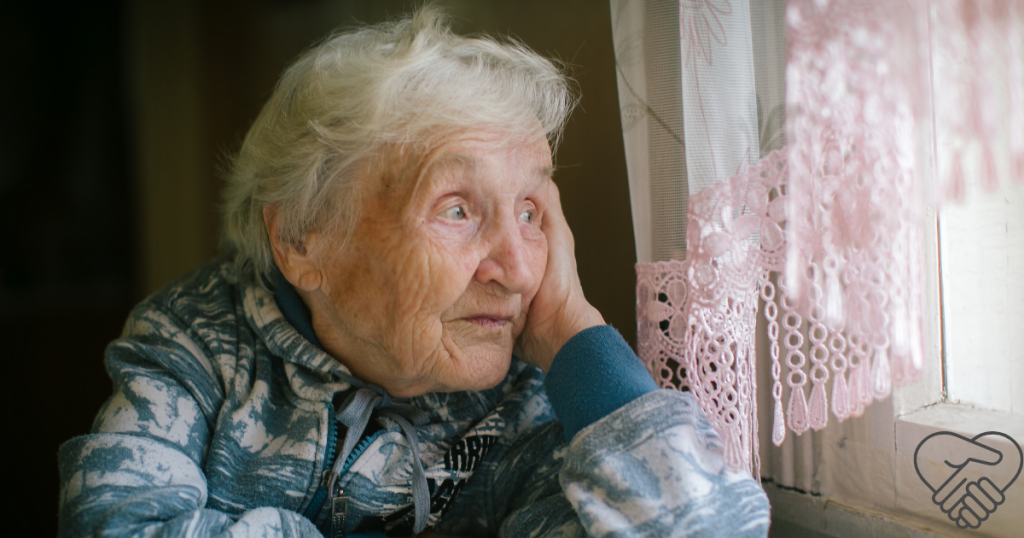
A common symptom of dementia is what is often called a “blank stare.” When this happens, the eyes of your loved one with dementia may not seem to focus on their surroundings; their gaze appears distant and expressionless. Family members often feel as though their loved one is “not really there,” even when they are physically present.
Facial Expressions Can Also Change
Alongside the blank stare, their facial expressions may also change. Facial movements gradually become more limited, and fewer emotions appear on their face. Someone with dementia may often have a mask-like expression: they smile less and react less frequently with facial expressions to what is happening around them, meaning it is harder for their face to reflect their feelings. As a result, relatives often find that the emotional feedback they were used to before is missing.
The Lack of Connection
This phenomenon is particularly difficult for those around them. People naturally seek connection with one another through eye contact and facial expressions. A look, a smile, or a twitch of the face is important feedback that the other person is paying attention to us, understands us, or empathizes with us. When these signs are missing, relatives can easily feel that there is no real connection, or that their loved one is no longer emotionally attached to them, that we are no longer important to them, or that they do not love us anymore.
Difficulty Perceiving Things
The blank stare and reduced facial expressions do not necessarily mean that your loved one with dementia has no feelings. In many cases, they continue to feel, bond, and react to their loved ones; it is just that because of dementia, it is harder for them to perceive or process the events around them. They need more time to grasp what is happening, and they cannot always express their emotions in the same way as before. Just because their face or gaze gives less feedback does not mean they don’t have feelings inside or that connection isn’t important to them.
The blank stare is not permanent.
Many relatives say there are better and worse periods. A familiar voice, a fond memory, a loved family member, or an old photograph can sometimes bring “life” back into their eyes and briefly “strengthen the bonds.”
Too many stimuli can worsen the “blank stare phenomenon.”
If the environment is noisy, many people are talking at once, or too much information is reaching your loved one with dementia, they can easily become overwhelmed. In these moments, they may withdraw even further, and their stare may seem even blanker.
A lack of eye contact is not necessarily rejection.
Relatives often take it as a personal insult or indifference when their loved one does not look at them. In reality, it is often simply that the brain has a harder time processing visual information, and maintaining eye contact requires greater effort.
Emotions can appear in other ways.
Even if their facial expression is less revealing, someone with dementia can still react to a touch, a kind voice, a hug, or familiar music. These reactions show that the emotional connection is still very much alive.
Behind the blank stare, there is often not emptiness, but rather a processing difficulty caused by dementia. Although the eyes and facial expressions provide less feedback, the inner world, feelings, and relationships of your loved one with dementia often continue to exist. It is important to know that the bond can be maintained not only through eye contact, but also through voice, touch, and simple presence.
Important Disclaimer
The information and advice presented on this website and in this article are for informational purposes only. They do not constitute a medical diagnosis or individual therapeutic recommendations. The operator/author of the website assumes no liability for any direct or indirect damages, health issues, or misunderstandings resulting from the use of this information. Everyone applies the described methods at their own risk. Please consult your physician before making any lifestyle changes or applying any complementary therapies.
About the Author
Suzanne Sandwiese – Dementia Caregiver, Mental Health Assistant
I have more than 12 years of practical experience in caring for elderly people and patients living with dementia. My goal is to translate knowledge about dementia into understandable, practical advice that can be applied in daily life, thereby helping families live together with the disease. As the author of several professional books and the founder of a popular Facebook page, my mission is to provide clear and, above all, usable guidance to all those who care for loved ones living with dementia.
Looking for practical, hands-on guidance for caring for a loved one with dementia at home? This comprehensive guide offers real-world advice and strategies to help you navigate everyday caregiving with confidence.
Struggling with stress-free bathing, hair washing, or nail care for a person with dementia? Discover practical, empathetic techniques to turn daily hygiene routines into calm and dignified experiences.
Managing incontinence in dementia care can feel overwhelming, but the right approach makes all the difference. Learn practical, experience-based steps to maintain dignity, comfort, and routine at home.
Agitation and aggressive behaviors in dementia are often cries for help rather than intentional actions. Discover practical, practical-proven techniques to de-escalate difficult situations and create a peaceful environment.
Apathy, anxiety, and mood changes are among the hardest non-verbal symptoms of dementia to navigate. This practical guide helps you understand these emotional challenges and offers actionable steps to support your loved one.