
In this article, we will focus on aggression. We will talk about the verbal and physical aggression that often appears in those living with dementia, and the warning signs of an angry outburst. We will look at what might lie behind these aggressive episodes. Most importantly, we will discuss what you can do when your loved one is angry or aggressive.
Aggression in Dementia
Unfortunately, dementia affects more than just memory. As the condition progresses, the mental “brakes” and emotional regulation centers of the brain also become damaged. Because of this, your loved one, who may have been calm until now, may react with anger or aggression even to innocent things due to the effects of dementia.
Anger and aggressive behavior can appear more frequently and in harder-to-control forms in someone with dementia, developing as a result of the psychological changes linked to the condition. A family member with dementia often finds it difficult to interpret what is happening to them and around them; they may not understand what we are saying or what we want from them, and this can lead to increased tension and outbursts.
The form and intensity of “dementia aggression” varies from person to person and is often influenced by the current situation, the state of your loved one, or environmental triggers.
Verbal and Physical Aggression
Aggression is a behavior where an individual acts in an offensive way toward others through words or actions. In a person living with dementia, aggression can manifest in various forms. Verbal aggression is common, showing up as shouting, insulting or threatening remarks, and angry speech. In these moments, your loved one might say hurtful things or speak in a sarcastic, condescending tone.
These outbursts do not come from conscious malice; they are expressions of your loved one’s frustration, fear, or confusion. Dementia affects emotional regulation, communication, and how well someone can control their behavior. A relative with dementia can easily become frustrated, insecure, or scared, and they often release this through swearing. A simple misunderstanding, tiredness, or too much stimulation can trigger such a reaction.
Physical aggression can also occur in someone with dementia. For example, they might push someone, knock over an object, or throw something. These reactions often appear when your loved one feels threatened, doesn’t understand the events happening around them, or cannot properly express their needs—such as being hungry, thirsty, or in pain.
The Importance of Early Recognition
The most important thing is early recognition. If we notice the first signs of the “storm,” we have a much better chance of avoiding a major confrontation or conflict. Aggression is much easier to prevent than to manage. Remember: behind every outburst, there is always some kind of need, pain, or frustration.
Warning Signs of an Outburst
A person living with dementia often can no longer express their feelings or pain with words. Therefore, their body, their movements, and their behavior speak for them. Pay attention to these physical signs:
- Tension: This is one of the most obvious signs.
- Clenched fists.
- Clenched jaw (often accompanied by teeth grinding).
- The gaze becomes sharp, or perhaps empty and fixed.
- Increased restlessness and pacing:
- Tapping their feet.
- Repetitive movements (e.g., smoothing their clothes, clutching an object).
- A sudden, intense urge to move (“I have to go”). Your loved one wants to leave the environment causing the tension.
- Rapid breathing: Shallow, fast breathing is a clear sign of rising anger.
- Changes in speech:
- Change in tone: It’s not necessarily the volume that increases, but the tone becomes sharper, more critical, or hysterical. The pace of speech speeds up.
- Repeating words, complaining: Your loved one constantly repeats the same complaint (e.g., “I’m hungry!”, “It’s cold!”), even after the problem has been solved. This indicates that hunger is not the real issue.
- Silence and withdrawal: Sometimes the approach of anger is signaled by your loved one suddenly becoming quiet and avoiding eye contact. The opposite can also happen: staring into your eyes with a fixed gaze. This can be a sign of increasing internal tension.
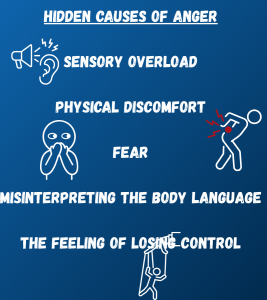
Hidden Causes of Anger
Here are some common triggers worth watching out for:
- Sensory overload: Too many people in the room, the TV is too loud, or the lights are too bright. The slowed-down brain cannot process so much information.
- Physical discomfort: Pain (toothache, headache, stomach ache), constipation, fatigue, hunger, or thirst. Since a relative with dementia cannot put into words what is wrong or what they want, they express what is bothering them through anger.
- Communication problems: They don’t understand what we are saying, which makes them nervous, resulting in anger.
- Unexpected events: People living with dementia like things to happen the same way and at the same time. A sudden change can cause anxiety and make them tense.
- Misinterpreting the body language or intentions of the caregiver or family member.
- The feeling of losing control over their abilities and memory.
- Fear.
What Can We Do?
- Stay calm: A family member with dementia quickly picks up on our tension. Take a deep breath, and speak slowly and calmly.
- Change the setting: If possible, lead your loved one into another room or a different part of the house. Changing the location helps change the negative mood.
- Keep your distance: Do not get too close to them. Maintain some personal space.
- Stop arguing: Do not argue or contradict them! Arguing only causes further irritation for someone with dementia.
- Distract them: Redirect their attention with a simple, calming activity (e.g., “Please, hold this pillow,” “Let me show you what I bought at the store today.”).
- Always inform the doctor! Managing aggression is a medical task, so talk to the doctor, who can treat aggression with appropriate medication.
NON-VERBAL COMMUNICATION IN DEMENTIA CARE – Dementia in practice
The most important thing is to protect yourself! In the event of physical aggression, call for help immediately. Do not try to handle the situation alone. If attacked, take a step back, keep your distance, leave the room (if you can), and call for help!
The anger of a person living with dementia is not about you (the caregiver); we must always keep this in mind! Behind aggressive reactions, most often lie the confusion, fear, vulnerability, or the feeling of being misunderstood that stem from the illness. Your loved one often cannot express exactly what they need, their feelings, or their pain, so their tension manifests as angry behavior.
It is important to remember that these reactions are not personal attacks, but consequences of cognitive decline. Keeping this in view makes it easier to maintain our patience and love. Understanding their behavior helps us to be present for our loved one with dementia with more empathy and acceptance, even in difficult situations.
Managing unexpected behaviors is one of the most taxing parts of caregiving. If you found this helpful, you can find more strategies and expert insights in our Behavioral Challenges – Dementia in practice hub. Together, we can replace helplessness with intentional, empathetic reactions.
Important Disclaimer
The information and advice presented on this website and in this article are for informational purposes only. They do not constitute a medical diagnosis or individual therapeutic recommendations. The operator/author of the website assumes no liability for any direct or indirect damages, health issues, or misunderstandings resulting from the use of this information. Everyone applies the described methods at their own risk. Please consult your physician before making any lifestyle changes or applying any complementary therapies.
About the Author
Suzanne Sandwiese – Dementia Caregiver, Mental Health Assistant
I have more than 12 years of practical experience in caring for elderly people and patients living with dementia. My goal is to translate knowledge about dementia into understandable, practical advice that can be applied in daily life, thereby helping families live together with the disease. As the author of several professional books and the founder of a popular Facebook page, my mission is to provide clear and, above all, usable guidance to all those who care for loved ones living with dementia.
My books – Dementia in practice
Looking for practical, hands-on guidance for caring for a loved one with dementia at home? This comprehensive guide offers real-world advice and strategies to help you navigate everyday caregiving with confidence.
Struggling with stress-free bathing, hair washing, or nail care for a person with dementia? Discover practical, empathetic techniques to turn daily hygiene routines into calm and dignified experiences.
Managing incontinence in dementia care can feel overwhelming, but the right approach makes all the difference. Learn practical, experience-based steps to maintain dignity, comfort, and routine at home.
Agitation and aggressive behaviors in dementia are often cries for help rather than intentional actions. Discover practical, practical-proven techniques to de-escalate difficult situations and create a peaceful environment.
Apathy, anxiety, and mood changes are among the hardest non-verbal symptoms of dementia to navigate. This practical guide helps you understand these emotional challenges and offers actionable steps to support your loved one.