
In this detailed guide, we not only clear up common misunderstandings but also take a deep look at the key differences between dementia and Alzheimer’s disease. We explain the four most common types of dementia — from Alzheimer’s to vascular dementia, Lewy body dementia, and frontotemporal dementia — and list the symptoms of each one in clear points.
We also discuss often misunderstood warning signs such as apathy, drastic personality changes, and disruption of the circadian rhythm, meaning the body’s internal clock. With practical, caregiver-focused advice, we help you recognize the early stages of the disease and support and care for your loved one at home.
WHAT IS THE DIFFERENCE BETWEEN DEMENTIA AND ALZHEIMER’S DISEASE?
Many people use the two words (dementia and Alzheimer’s) as if they mean the same thing, but there is an important difference. Dementia is a general term, a group of symptoms that describe a decline in thinking, memory, and social abilities severe enough to interfere with daily life.
Alzheimer’s disease is a specific illness. It is the most common cause of dementia.
For example, If someone coughs, that is a symptom (like dementia). The cough can be caused by pneumonia, a cold, or an allergy (these are specific diseases, like Alzheimer’s). In other words, every person with Alzheimer’s has dementia, but not every person with dementia has Alzheimer’s disease.
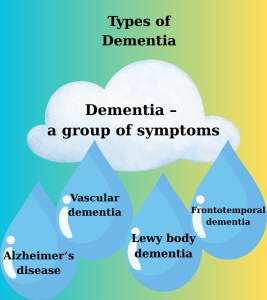
Figure 1: Dementia is a general term that includes many different diseases. The most common is Alzheimer’s disease.
TYPES OF DEMENTIA
Although the symptoms may look similar, the cause behind the dementia determines how your loved one’s behavior will change and what you should expect during caregiving and daily life together.
- ALZHEIMER’S DISEASE: THE MOST COMMON TYPE OF DEMENTIA
It accounts for about 60–80% of all dementia cases. In Alzheimer’s disease, abnormal protein deposits build up in the brain and destroy nerve cells and the connections between them.
• What should you watch for? It usually begins with short-term memory loss. The person may remember their wedding from 40 years ago, but forget that they already had breakfast ten minutes ago.
• Short-term memory loss: Repeating the same questions over and over.
• Disorientation in time and place: Getting lost in familiar areas, confusing day and night (for example, not knowing whether it is daytime or nighttime).
• Difficulty with everyday tasks: They can no longer make coffee or manage paying bills.
• Language problems: Searching for words, losing the thread of a conversation (for example, unable to follow a topic or understand a joke), or using words that do not fit.
• Personality changes: Mood swings, aggressive behavior, anxiety, and restlessness are common.
- VASCULAR DEMENTIA
This is the second most common type. It is caused by problems with blood flow to the brain, such as small strokes or tiny blockages.
• What should you watch for? The progression is not slow and steady. It often starts suddenly and declines in steps, followed by periods of stability. People may be unable to orient themselves properly in time and space. Memory loss is also common in this type.
• Sudden decline: A rapid worsening followed by a more stable period.
• Impaired thinking: Inability to plan, organize, or divide attention. Slower thinking and delayed responses during conversation.
• Emotional instability: Sudden crying or laughing, restlessness, agitation, apathy, depression.
- LEWY BODY DEMENTIA
In this type, Lewy bodies appear in the brain.
What should you watch for? This type may involve visual hallucinations (for example, seeing “strangers” in the room) and Parkinson-like symptoms (tremor, shuffling walk). Fluctuating symptoms are typical: one hour, the person is clear-minded, the next hour completely confused.
• Visual hallucinations: Seeing people or animals that are not actually there.
• Fluctuating alertness: One moment fully clear, the next deeply confused or very sleepy.
• Parkinson-like symptoms: Muscle stiffness, shuffling walk, balance problems, tremor.
- FRONTOTEMPORAL DEMENTIA (FTD)
This type often appears at a younger age (between 45 and 65 years) and affects the front parts of the brain.
• What should you watch for? Forgetfulness is not the first sign. Instead, personality changes come first. The person may become disinhibited, behave strangely in social situations, or become insensitive or rude. For families, this is emotionally one of the most difficult types.
• Personality change: A previously polite person becomes rude or loses inhibition.
• Loss of social control: Inappropriate remarks to strangers, socially unacceptable behavior.
• Language problems: Difficulty pronouncing words or understanding their meaning, reduced vocabulary, problems finding words.
HOW DO WE RECOGNIZE DEMENTIA?
- DISORIENTATION IN A FAMILIAR PLACE
It is not only about getting lost in the city. This often begins at home. The person may stop in the hallway and not know where the kitchen is, or suddenly not recognize their own bedroom.
• For example: They start walking to the corner store where they have shopped for 10 years, but stop at the corner because the street suddenly feels unfamiliar. Fear and panic may take over, which can even lead to aggression.
• Practical tip: If this has already happened and you suspect dementia, always make sure they carry a card in their pocket with your contact details when they go out alone.
- PUTTING OBJECTS IN UNUSUAL PLACES
This symptom is not simple messiness. The person’s brain may feel it is “logical” to put the iron in the refrigerator, maybe because it is “safe” there or because it “cools down” there.
• For example: You find keys in the trash, the remote control in the freezer, or dirty laundry in the oven. This is often followed by accusations: “Someone stole it…!” because they do not remember where they put things.
• Practical tip: Try not to correct, warn, scold, or convince them — it is completely useless. If they are looking for something, help them “find” it.
- WORD-FINDING DIFFICULTY (APHASIA)
This is one of the most frustrating symptoms for the person. They know what they want to say, but the word is “lost.”
• Example: They cannot recall the word “spoon,” so they say, “the thing we eat soup with.” They may use completely wrong words (for example, say “window” instead of “clock”), or create new meaningless words.
• Practical tip: Be patient, do not immediately finish the sentence for them, give them time. If you see they are struggling a lot, say: “Do you mean the spoon, dear?”
- DECLINE IN JUDGMENT AND DECISION-MAKING
The person loses the ability to judge the consequences of their actions.
• For example: In summer, in 95°F (35°C) heat, they put on a thick winter coat because they think it is winter. Or they give their entire savings to “agents” they would never have trusted before. They may also lose their sense of danger, for example, crossing a busy road between cars.
• Practical tip: It is wise to arrange financial matters in time, before serious problems occur.
- APATHY
Often this is the quietest, yet most painful sign. The person loses inner motivation and does not feel joy.
• For example: When the grandchildren arrive, which used to be their greatest joy, they do not start playing, do not ask questions, do not talk with them. Nothing interests them. They sit all day doing nothing, just staring ahead.
• Practical tip: Prepare an activity they used to enjoy (for example, shelling beans, looking at old photos, kneading dough), place it directly in front of them on the table, and start doing it yourself. Then ask: “Could you help me a little?”
- PERSONALITY AND BEHAVIOR CHANGES
The disease rewrites personality and behavior. The person is often angry, irritable, and accusing.
• For example: The person angrily says, “The neighbor stole my cardigan.”
• Practical tip: Do not correct them by saying this is impossible. Instead, say: “I see that you are very angry right now. I understand. I will talk to them so this does not happen again.”
- DISRUPTION OF THE CIRCADIAN RHYTHM (SLEEP–WAKE DISORDER)
The internal biological clock “breaks down,” which can lead to exhaustion for the caregiver or even the whole family.
• For example: At 10 p.m., when you would like to sleep, the person starts emptying the wardrobe, or gets dressed to go to work. During the day, however, they sleep deeply in the armchair. In the evening, “Sundowning” is common, when twilight increases fear and restlessness.
• Practical tip: Create a strong contrast between day and night. During the day, let in as much natural light as possible. From 4 p.m., consciously start reducing lights and blocking out noise. Try to keep them somewhat active during the day — include walking, light exercise, and simple household tasks. Do not let them sleep too long during the day.
- MEMORY PROBLEMS
Short-term memory loss is typical.
• For example: A person with dementia forgets that the caregiver has just visited, but remembers an event from 20 years ago.
• Practical tip:
Use clearly visible reminders to help recall daily events. For example:
• notes written in large letters on the table or wall (“The caregiver was here today”)
– a whiteboard or bulletin board in the room with the daily schedule
– a wall calendar with the current day marked
– a clock that shows the day and part of the day (morning, afternoon)
A regular daily routine is important because repetition creates a sense of safety. Talk with them about old memories, because these often remain and can calm them.
More about forgetfulness: FORGETTING – Dementia in practice
PRACTICAL ADVICE FOR LIVING TOGETHER
CREATE A SAFE ENVIRONMENT!
For a person with dementia, the world feels chaotic. Help them by simplifying the environment:
- Label doors: Put a picture of a toilet on the bathroom door, or write in large letters: TOILET.
- Prevent accidents: Remove loose rugs from the home, and move cables out of their way.
- Good lighting: Installing motion-sensor lights can reduce the risk of falls.
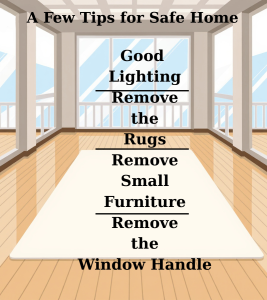
Figure 2: Small changes in the home environment that increase the sense of safety for a person with dementia.
COMMUNICATION
How should we communicate with a person with dementia? Simply, clearly, with good articulation.
• Short sentences: Give only one piece of information or request at a time. Do not ask: “What would you like for lunch, fried meat or vegetables, and would you like coffee after?” Instead: “Would you like fried meat?”
• Eye contact: Always communicate face to face and look into their eyes.
• Patience: If the person becomes aggressive, do not take it personally. It is not about you; the disease causes the irritable behavior. Step away for a minute and take a deep breath.
WHEN SHOULD WE SEE A DOCTOR?
Most families ask for help only after something serious has already happened (for example, the person wandered off in the middle of the night or left the gas on). This is a huge mistake.
If you regularly notice even two of the warning signs listed above in your loved one, do not delay any longer: contact your family doctor, then a neurologist or psychiatrist specialist.
Early diagnosis is crucial not only because of medication, but also because it gives you time to prepare. Dementia is a progressively worsening condition, and caregiving requires a plan.
Understanding dementia and Alzheimer’s disease is the first step toward acceptance. It matters whether forgetfulness is caused by a vascular problem or involvement of the frontal lobe. Pay attention to the signs: apathy, nighttime wandering, and personality changes as well. Awareness helps you remain more patient and seek medical help in time. This is how home care can work, and how you can remain physically and mentally healthy, too.
This article is a key chapter in our comprehensive guide: Understanding – Dementia in practice. Building a strong foundation of knowledge is the first step toward compassionate care. Explore the full guide to gain a deeper perspective on the biological changes and early signs of the condition.
Important Disclaimer
The information and advice presented on this website and in this article are for informational purposes only. They do not constitute a medical diagnosis or individual therapeutic recommendations. The operator/author of the website assumes no liability for any direct or indirect damages, health issues, or misunderstandings resulting from the use of this information. Everyone applies the described methods at their own risk. Please consult your physician before making any lifestyle changes or applying any complementary therapies.
About the Author
Suzanne Sandwiese – Dementia Caregiver, Mental Health Assistant
I have more than 12 years of practical experience in caring for elderly people and patients living with dementia. My goal is to translate knowledge about dementia into understandable, practical advice that can be applied in daily life, thereby helping families live together with the disease. As the author of several professional books My books – Dementia in practice and the founder of a popular Facebook page, my mission is to provide clear and, above all, usable guidance to all those who care for loved ones living with dementia.
Looking for practical, hands-on guidance for caring for a loved one with dementia at home? This comprehensive guide offers real-world advice and strategies to help you navigate everyday caregiving with confidence.
Struggling with stress-free bathing, hair washing, or nail care for a person with dementia? Discover practical, empathetic techniques to turn daily hygiene routines into calm and dignified experiences.
Managing incontinence in dementia care can feel overwhelming, but the right approach makes all the difference. Learn practical, experience-based steps to maintain dignity, comfort, and routine at home.
Agitation and aggressive behaviors in dementia are often cries for help rather than intentional actions. Discover practical, practical-proven techniques to de-escalate difficult situations and create a peaceful environment.
Apathy, anxiety, and mood changes are among the hardest non-verbal symptoms of dementia to navigate. This practical guide helps you understand these emotional challenges and offers actionable steps to support your loved one.