

For those living with dementia, wandering and a compulsive urge to move are very common symptoms. This isn’t just about taking a casual stroll; it is often a restless, repetitive, and seemingly aimless pacing.
In this post, we’ll take a closer look at one of the biggest challenges for caregivers: the constant need to be “on the move.” We will explore why people with dementia feel this internal drive to set off, what triggers it (such as fear), and how it affects the family’s daily life.
We’ll break down how this behavior shows up—from pacing around the living room to being wide awake and restless at night. We also want to acknowledge the massive burden this places on loved ones: the constant state of “high alert,” the lack of sleep, and the physical exhaustion that can make even holding down a job feel impossible. Finally, we’ll touch on the difficulty of finding nighttime care and the rising costs that often leave families feeling stranded.
The Difference Between Wandering and the Urge to Move
While the terms are often used interchangeably, there is a subtle difference:
- Wandering: Often looks like, “I don’t know where I am or what I’m doing.” It’s more about being lost or disoriented.
- The Urge to Move (Pacing/Exit-Seeking): Feels more like, “I have to get out of here because something is wrong.” An internal impulse drives it.
In reality, these two behaviors usually overlap, making it hard to tell exactly where one ends and the other begins.
Why Does Wandering Happen?
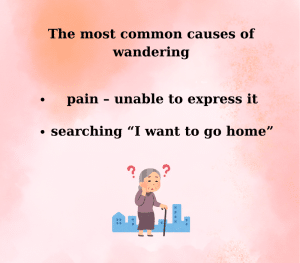
Wandering is rarely caused by just one thing. As the brain changes, it struggles to process surroundings or internal needs. It’s less of a choice and more of an uncontrolled physical response. Common causes include:
- Confusion about time and place: The person may lose their connection to the present. They might not recognize their own home, forget where the bathroom is, or not realize they are already “home.”
- An inability to communicate: If they are hungry, thirsty, or in pain but can’t find the words to say so, they might express that tension by pacing.
- Environment: A room that is too noisy or bright (over-stimulation) or, conversely, a lack of activity (boredom) can trigger the need to move.
What Drives the “Urge to Move”?

- The need to escape: Often, this is fueled by fear, anxiety, or even paranoia. If a person doesn’t recognize their family or home, they may feel they are in a strange place and need to find “safety.”
- Irrational “missions”: Sometimes there is a goal, even if it doesn’t make sense to us. They might try to “go to work,” “pick the kids up from school” (even if the kids are now adults), or buy a ticket to go back to a childhood home.
How It Looks in Daily Life
Wandering often starts gradually. You might notice:
- Pacing the house: Walking from room to room as if searching for something, but being unable to say what it is.
- Night-time restlessness: Flipping their sleep cycle, getting dressed, or packing bags in the middle of the night.
- “Exit-seeking”: Constantly checking door handles or staring out the window, looking for a way out.
- Shadowing: Following the caregiver everywhere because they are afraid of being alone or trying to burn off nervous energy.
- Repetitive motions: Their hands might “wander” too—opening and closing drawers, or constantly folding and unfolding clothes.
The Impact on the Family
When a loved one starts wandering, it’s often a turning point for the family. The need for constant supervision is exhausting.
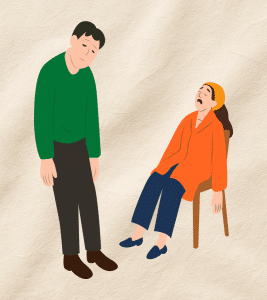
Caregivers live in a state of permanent “high alert.” There is the constant fear that the person might fall, get hurt, or manage to leave the house and get lost. This leads to chronic sleep deprivation. When you have “one eye open” listening for every creak on the floorboards, you never truly rest.
This exhaustion spills over into every part of life. If you aren’t sleeping, it’s hard to focus at work, your patience wears thin, and your own health can suffer. Furthermore, families often become socially isolated. They may stop inviting people over or quit going out because they are worried about the person’s constant pacing or attempts to leave.
The Struggle for Night-time Help
The night is the hardest time for families because that’s when they are most alone. While it’s usually possible to find a helper or a neighbor for a few hours during the day, finding professional nighttime care is a different story.
There is a huge shortage of specialists willing to work 10-12-hour night shifts, and those who do are often very expensive. For the average family, the cost of overnight care quickly becomes unaffordable. This leaves many family members trapped in a cycle of “night shifts” at home, with no choice but to stay awake and watch over their loved one themselves.
Important Disclaimer
The information and advice presented on this website and in this article are for informational purposes only. They do not constitute a medical diagnosis or individual therapeutic recommendations. The operator/author of the website assumes no liability for any direct or indirect damages, health issues, or misunderstandings resulting from the use of this information. Everyone applies the described methods at their own risk. Please consult your physician before making any lifestyle changes or applying any complementary therapies.
About the Author
Suzanne Sandwiese – Dementia Caregiver, Mental Health Assistant
I have more than 12 years of practical experience in caring for elderly people and patients living with dementia. My goal is to translate knowledge about dementia into understandable, practical advice that can be applied in daily life, thereby helping families live together with the disease. As the author of several professional books and the founder of a popular Facebook page, my mission is to provide clear and, above all, usable guidance to all those who care for loved ones living with dementia.