
Recognizing the first signs of dementia is no easy task, as changes often seep into daily life almost unnoticed. In this article, we will cover the emergence of memory problems and deal with the issue of apathy. We will also explain in detail the changes in movement and the signs of declining fine motor skills.
What is Dementia?
Dementia is not a single disease, but a syndrome—a collective term for the decline in cognitive abilities. Cognitive abilities include thinking, memory, attention, perception, learning, and communication.
When people hear the word dementia, the first thing that comes to mind is forgetting. However, in the case of dementia, it is not just simple forgetfulness, but a gradual mental decline. Things that were previously self-evident (for example, the function of an object or a social rule) slowly become incomprehensible. Dementia is actually a change in how one connects to the world: words come with more difficulty, connections fade away, and environmental stimuli sometimes feel like unintelligible noise.
It is important to understand that physical changes in the brain lie behind dementia. This is not intentional behavior; we are talking about a decline in cognitive functions that fundamentally overrides previous personality traits, behavior, thinking, and logic.
Dementia does not begin with a medical diagnosis. It starts much earlier in everyday life—perhaps during a simple conversation—when the suspicion arises: something is wrong, something has changed, this isn’t right…
Recognizing the First Signs of Dementia
Many people ask, “How do we know first?” It’s hard to put into words because early symptoms of dementia often look like simple fatigue. Many people also (mistakenly) chalk them up to aging.
When someone we love starts behaving “differently,” we tend to turn a blind eye at first. “Oh, they’re probably just tired,” or “Everyone forgets names.” If you suspect the illness, it’s best to take your loved one to a doctor as soon as possible because early recognition is worth its weight in gold. Not because there is some magic pill for elderly dementia, but because it allows us to truly understand them. We can recognize what is happening inside them and not mistake their actions for stubbornness or malice.
1. Loss of Interest and Apathy
Often, the first thing we notice isn’t forgetting, but that the person becomes emotionally indifferent toward their own life, surroundings, or hobbies. This is apathy. They aren’t necessarily sad or crying; they simply no longer care about things they used to be passionate about. Apathy is not laziness; it is the slow breakdown of motivation. A loved one living with dementia doesn’t stop watering the flowers because they forgot; they stop because their brain no longer sends the feeling of joy that gardening used to bring. This kind of emotional emptying is often more painful for the family than the memory loss because it can feel like their loved one doesn’t love them anymore. This isn’t true: it’s just the disease blocking the expression of emotions.
- Neglecting hobbies: Imagine someone who loved their garden their whole life, knew every plant by name, and cared for them conscientiously. Now, they just sit on the porch, watching the weeds grow, and it doesn’t even occur to them to pull a few.
- Withdrawing from company: Previously, they were the life of the party at Sunday lunch; now, they just stay silent or make excuses to avoid family events.
- Indifference toward the family: A grandchild is born, or something big happens in the family, and they just give a nod or turn away, with no joy visible in their eyes.
2. Forgetfulness, Decline of Short-Term Memory
This is the most typical early sign, but not the way you see it in the movies. At first, it’s not that they don’t recognize family members (that comes later); it’s that they don’t remember what you told them five minutes ago. In this stage, the brain is like a leaky basket: whatever you put in falls out immediately. It’s not childhood memories that disappear, but the moments of “now.” A person with dementia can talk for minutes about their wedding thirty years ago, but can’t recall if they took their medicine ten minutes ago. This is why they might tell the same story three times during one lunch, completely convinced they are saying it for the first time.
- Example: They ask what’s for lunch. You say roast meat. Two minutes later, they ask again. Ten minutes later, again.
- How is this different from normal forgetting? In dementia, the brain simply doesn’t save new information. No matter how many times you repeat it, the information remains unfamiliar to them.
3. Well-Known Routes Suddenly “Lengthen.”
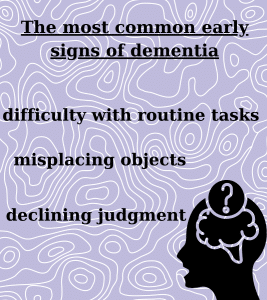
Someone who has walked to the same shop for years might suddenly stop at the corner and not know which way to go home. This isn’t a dramatic “getting lost”; it’s more like a momentary “freeze.” In the early stages of dementia, disorientation only happens in wider environments, but later, their own neighborhood and eventually their home becomes an alien, unknown labyrinth. The brain can no longer fit the buildings they see into a mental map of directions. This is when they stop on the way to the store, suddenly unsure whether to turn left or right. This uncertainty creates huge anxiety, which is why many people prefer not to leave the house at all, fearing a “freeze.”
- Example: They head to the post office but stop in the next street, looking around uncertainly. If you ask where they’re going, they might snap, “I’m just walking,” but there’s a flicker of panic in their eyes because, in that moment, they can’t piece together how to get to the post office. In fact, they likely don’t even know where they originally wanted to go or why.
4. Daily Routines Become Harder
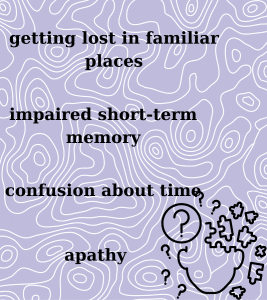
This is where more complex but routine tasks come in, such as making coffee, paying bills, or cooking. Complex tasks, like following a recipe or using a remote control, are “routine sequences” consisting of several steps. Dementia breaks these links. The person starts making coffee but stops at filling the water because they can’t retrieve the next step, adding the coffee, from their memory. What they used to do automatically, without even thinking, now becomes as difficult as assembling a complex machine without instructions.
- Example: They always made divine soup. Then, suddenly, the food is too salty. Next time, they leave out the vegetables. Then you see them just standing by the pot, seemingly not knowing which step follows the other. This is because the process of cooking has been erased from their mind.
5. Confusion in Time: “What Time is it Now?”
For us, it’s natural that it’s Tuesday, ten o’clock in the morning. In early dementia, time begins to blur. The loss of a sense of time isn’t just about dates “erasing.” The person’s internal clock gets scrambled, so the boundaries between night and day fade. It can happen that at 8:00 PM, they think it’s 8:00 AM and head to the store, or they look for summer clothes in winter because in their head, it’s July. Because of this constant temporal uncertainty, those living with dementia feel lost in the world, as they cannot anchor the present moment to anything.
- Example: They get dressed in their best clothes on a Monday morning because they think it’s Sunday and they have to go to church. Or even more common: they wake up at dawn and start preparing dinner because they can’t tell from the light outside whether it is morning or evening.
6. Searching for Words and Stalled Speech
We all have those moments when a word is on the tip of our tongue, but we can’t remember a name or a movie title. But for a person with dementia, searching for words becomes more frequent, and they try to fill the gaps in strange ways. Communication difficulty isn’t just about missing words; it’s about the structure of sentences falling apart. As they feel their words running out, they start to describe the word they can’t remember. Often, they break off a sentence because the thing they wanted to talk about simply “evaporates” from their head mid-sentence. Because of this, they often choose silence in company. It is also very hard for family members when they can no longer “just talk” with their loved one.
- “Word Salad” and substitution: It often happens that they can’t find the right expression, so they make something up. For example, instead of “shoe,” they say “that thing for the feet.” Or they can’t remember “remote control,” so they say, “You know, that thing we… do the TV with.” Even more confusingly, they might insert a completely unrelated word into the sentence. At first, they might notice and correct it, but later, the mistake doesn’t occur to them.
- Endless repetition of questions: Asking the same question a hundred times tests everyone’s patience. They ask the same thing repeatedly because their brain no longer records the answer.
- Losing the thread of conversation: You might notice that when several people are talking at the table, your loved one quickly falls silent. They can no longer follow topic changes, jokes, or stories with multiple threads. They tend to just smile and nod, but if you ask them a question, it’s clear they don’t really know what is being discussed.
7. Putting objects in unusual places
This is one of the surest signs of trouble. This symptom is more than just absent-mindedness; it’s a lack of recognizing connections. Anyone can leave their keys in the pantry, but they know they don’t belong there. A person living with dementia, however, might feel it’s logical to put dirty socks in the oven or hide their wallet in the trash to keep it safe from thieves. Then, when they can’t find the things they tucked away, they often accuse those around them of stealing because they don’t remember their own actions.
- Example: You find the iron in the fridge or a wristwatch in the sugar bowl. If you ask how it got there, the answer is often that someone else put it there, not them.
8. Mood swings and personality changes
A person who was previously kind and patient may suddenly become irritable or suspicious. For example, a formerly cheerful grandmother might become distrustful or even hostile. This change happens because the frontal lobe—which controls our impulses—is affected. Your loved one isn’t becoming malicious; they are losing the “filter” that previously held back their anger or fear. Sudden crying or laughing is often caused by the person sensing their own mental decline, and this helplessness explodes out of them like an emotional storm.
- Example: They get angry over things that never bothered them before. Or the opposite happens: they withdraw completely, lose interest in their hobbies, and don’t want to go out or watch the game shows they used to love. This is often because they feel something is wrong, and they use withdrawal to protect themselves from being “found out” or facing failure.
9. Poor judgment
Weakened judgment is often most visible—and worst—in financial matters. They make decisions they never would have made before. Due to the decline in common sense and the sense of danger, a person with dementia becomes vulnerable. They can no longer assess the value of money, so they might spend half their pension on a piece of junk, or they might go for a walk in winter without a coat because they don’t feel the risk of catching a cold. Poor judgment is dangerous because families often only notice the trouble after significant financial loss or when their elderly loved one has put themselves in a dangerous situation.
- Example: They order things from TV shopping channels that they have no use for, or give huge amounts of money to door-to-door salespeople or agents because they can’t judge the value of the money or the danger of the situation.
10. When movements “fall apart”: instability
Unsteady walking and balance problems are often among the first signs. They don’t lift their feet like they used to. Motor coordination is closely linked to cognitive functions. “Stumbling” actually stems from faulty commands from the brain: the legs no longer obey, and steps become shorter and more hesitant.
Knocking things over isn’t clumsiness either, but a decline in spatial awareness; the person living with dementia simply doesn’t see the glass where it actually is. Unsteady movement, loss of balance, tripping, falls, and accidents are often the first signs that the nervous system can no longer precisely control the body.
- Stumbling: They trip over thresholds that have been there for thirty years. Unexplained falls become more frequent, which they dismiss by saying, “I just slipped” or “I wasn’t paying attention.”
- Spatial awareness issues: They reach for a glass of water on the table but miss by inches, or simply sweep the glass onto the floor. It’s not because they can’t see it, but because their brains miscalculate the distance.
Loss of fine motor skills:
When fingers no longer obey, this is when those living with dementia stop their favorite pastimes, such as sewing, knitting, or crosswords.
- The “end of the hobby”: Someone who knitted perfect scarves for years suddenly gets stuck, gets tangled in the yarn, and then throws the whole thing aside in anger. Their fingers can no longer perform the fine, coordinated movements needed for knitting.
- Messy handwriting: It’s worth looking at a shopping list or a signature. The letters become shaky and the lines drift because the hand becomes shaky and uncertain.
- Dressing difficulties: Buttoning a button or tying a shoelace suddenly becomes an unsolvable puzzle.
What should we look out for?
You need to watch for the collection of small changes. Forgetting a name now and then doesn’t mean anything. But if forgetfulness is paired with suspicion, putting objects in strange places, and the breakdown of daily routines, then something is working in the background. If you notice several early symptoms at once rather than just one sign, it is worth seeing a doctor.
Family members often try to “fix” the problem by speaking up, reminding, or correcting the loved one: “But Mom, don’t say you don’t know, we were at your place yesterday!” This is unnecessary and only creates tension. Logic and reasoning do not help here. Dementia certainly won’t improve by scolding or reminding a person with dementia because they made a mistake.
If you notice the signs above, don’t panic, but don’t sweep the problem under the rug either. Consult a doctor as soon as possible, as making a diagnosis is always their job! Without a medical diagnosis, these are just signs and suspicions, which do not necessarily mean dementia. Our job as relatives or caregivers is not to diagnose, but to notice the changes, stand by our loved one, accept them as they are, and inform the doctor.
It is important to realize that your loved one is not doing these things out of carelessness. They don’t ask something five times because they want to annoy you, but because they forgot they already received an answer. They don’t fail to respond because they aren’t paying attention, but because they cannot respond. They don’t stay in bed because they are lazy, but because they are feeling apathy.
Why is early recognition a lifesaver?
The sooner we recognize these small signs, the more time we have to prepare. Unfortunately, dementia is a continuously worsening condition, but if the person gets to a doctor in time, we don’t just get help in managing symptoms—we gain valuable time to prepare. Remember, you are not alone.
Knowledge is our strongest weapon. If we understand what is happening inside our loved one, anger is replaced by patience and acceptance. This is the only way we can be a true support, care for a loved one with dementia at home, and preserve our own peace of mind during this difficult journey.
Important Disclaimer
The information and advice presented on this website and in this article are for informational purposes only. They do not constitute a medical diagnosis or individual therapeutic recommendations. The operator/author of the website assumes no liability for any direct or indirect damages, health issues, or misunderstandings resulting from the use of this information. Everyone applies the described methods at their own risk. Please consult your physician before making any lifestyle changes or applying any complementary therapies.
About the Author
Suzanne Sandwiese – Dementia Caregiver, Mental Health Assistant
I have more than 12 years of practical experience in caring for elderly people and patients living with dementia. My goal is to translate knowledge about dementia into understandable, practical advice that can be applied in daily life, thereby helping families live together with the disease. As the author of several professional books and the founder of a popular Facebook page, my mission is to provide clear and, above all, usable guidance to all those who care for loved ones living with dementia.