
This article is designed to help you recognize when your loved one with dementia is in pain, even when they can no longer find the words to tell you. It explains how pain often shows up not through speech, but through changes in behavior. We will look closely at hidden signs such as sudden aggression, outbursts of anger, restlessness, pacing, sighing, withdrawal, or sleeping more than usual.
We also focus on facial expressions and body language—such as pursed lips, grimacing, a rigid posture, or protecting a specific part of the body. You will find practical steps here, too: we suggest keeping a diary and using simple “yes or no” questions. This guide also highlights when it’s time to call a doctor and how proper pain management and a comfortable environment can improve the well-being of someone with dementia. It helps you notice that “silent cry for help” in time.
Expressing Pain in Dementia
Dementia is not just about forgetting; it is also about the gradual loss of the ability to express needs, like pain. It is like having a toothache but being unable to tell anyone or ask for help.
As the ability to communicate declines, a family member with dementia won’t be able to say, “My knee hurts.” Instead, pain often manifests as a behavioral issue or a change in mood. As caregivers, it is our job to decode this silent message.
“He wasn’t eating, he wasn’t swallowing, he rejected everything. For two days, he didn’t sleep at all and was banging on the door so hard I thought it would break… Then it turned out he had a fever. I could see his face was red, but he was so irritable that I couldn’t even touch him. That’s why I didn’t realize he was burning up… Eventually, there was a break in the madness; he got tired and lay down. Finally. That was when I touched his face and could take his temperature,” says a relative caring for their father living with dementia.
Hidden Behavioral Signs of Pain
The way a person living with dementia reacts to pain often doesn’t look like what we expect. If someone who was previously calm suddenly changes their behavior, this can be a very strong warning sign of pain.
- Aggression and Outbursts: One of the most common signs. When your loved one suddenly refuses care or becomes aggressive during washing or dressing, the movements are likely causing them pain.
- Restlessness: They may pace aimlessly, seem unable to settle, get up and sit down, then get up again.
- Sighing or Groaning.
- Becoming Immobile: Avoiding standing up, which may point to joint pain.
- Withdrawal and Lethargy: If a relative with dementia becomes very withdrawn, hides, avoids everyone, or sleeps much more than usual, chronic pain might be the cause, alongside depression.
Facial Expressions and Posture
Body language is the most honest signal. Look for the following signs when trying to map out their pain:
Typical Facial Expressions:
- Knitted brows, wrinkles on the forehead.
- Pursed or tightly closed lips.
- Grimacing or squinting.
- Eyes becoming “blank” or a sad, tense expression.
Protective Posture:
- Clenched fists or arms tightly crossed over the chest.
- Guarding a body part: For example, if they constantly sleep on one side or push your hand away when you touch a certain area.
- A stiff, tense posture.
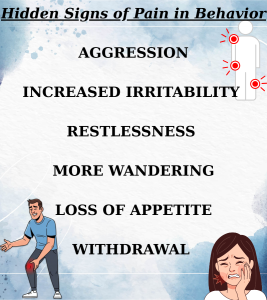
Figure 1: This illustration shows behaviors that may indicate your loved one with dementia is in pain.
Recognizing Pain – Practical Steps
Recognizing pain requires regular, careful observation. The following steps will help you answer the question: “What might hurt, and where?”
Observation
Observation is your best tool, especially since you know your loved one so well. You are the one who truly knows what is normal for them and what isn’t. This is why every small change matters.
Watch how they eat: Have they barely touched their food for two days? Do they suddenly stand up, pace, or become restless while eating? Did they use to sit calmly through a meal, but now fidget or push the plate away? Notice if they wander more than usual, say they want to go home more often, or are more irritable or aggressive.
Every unusual behavior can be a signal. If something wasn’t typical of them before but is now appearing regularly, it is worth writing it down. A diary helps you provide the doctor with concrete examples. If they are doing something they didn’t use to do, be sure to mention it. This could be the key to identifying pain or another underlying issue.
Ask Simple Questions (Yes/No Questions)
Don’t ask: “What hurts?”—this is too complicated for them. Try something simpler: “Does something hurt?” or “Does it hurt if I touch here?” These can be answered with a simple “yes” or “no.” It also helps to ask about specific body parts: “Does it hurt here?” “Does your leg hurt?” “Is this better now?”
When dressing: “Is this too tight?” When moving them: “Are you comfortable like this?” It is important to ask slowly, in a calm voice, and wait for a reaction. Often, the answer isn’t verbal—it comes in the form of a grimace, pulling away, tensing up, or even a sigh of relief. Take these signals seriously.
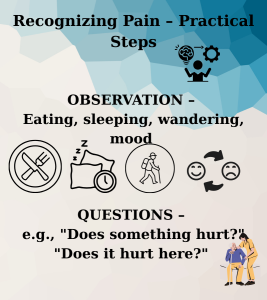
Figure 2: The illustration shows practical steps for recognizing pain: the method of observation and the use of simple yes/no questions.
Read more about wanderig:What to do in case of wandering and the urge to walk? – Dementia in practice
What Can We Do?
Doctor and Medication
If the signs above lead you to suspect they are in pain, consult a doctor about pain management. It cannot be stressed enough how important it is for the doctor to know about these signs and behavioral changes. Do not delay in telling them.
The sooner you get professional feedback, the sooner their suffering can be eased. Untreated pain is not just physical agony; it can cause tension, aggression, and refusal of care. By involving a doctor early, you can prevent unnecessary conflict and help someone with dementia become calmer and more cooperative. This makes life noticeably easier for both of you. If their behavior improves significantly after taking medication, it confirms that pain was the trigger.
Comfort
Make sure that when they are sitting or lying down, they are doing so comfortably. Help them find a cozy position. For example, check if the sheets or blankets are bunched up under them, or if the pillow is positioned correctly under their head. They may no longer be able to fix these things or recognize that something is pressing against them. Check that their clothes aren’t too tight.
In these situations, when your loved one with dementia is in pain, proper communication is vital. You can read more about it here: NON-VERBAL COMMUNICATION IN DEMENTIA CARE – Dementia in practice
Why is Recognizing Pain So Important?
Recognizing and treating pain in time doesn’t just relieve suffering; it often solves some of the most difficult behavioral problems. However, it is often extremely hard to realize that pain is the underlying cause, as a person living with dementia can no longer explain exactly what is bothering them.
They won’t say, “My lower back hurts” or “My knee is stinging.” Instead, their behavior changes. They become more restless, refuse touch, cry, get angry, or become unusually quiet.
You need to know that they are still communicating—just not with words, but through the language of their body. Their facial expressions, movements, posture, and the sounds they make all carry a message. They might pull their hand away when you touch a certain spot. They might become tense during dressing. They might lie down more because moving causes pain.
They are “telling” you what the problem is—we just need to learn how to understand this special language. If you observe changes with care and patience, you can recognize the signs of pain. And when the pain eases, the behavior often calms down, making daily life easier for everyone.
Important Disclaimer
The information and advice presented on this website and in this article are for informational purposes only. They do not constitute a medical diagnosis or individual therapeutic recommendations. The operator/author of the website assumes no liability for any direct or indirect damages, health issues, or misunderstandings resulting from the use of this information. Everyone applies the described methods at their own risk. Please consult your physician before making any lifestyle changes or applying any complementary therapies.
About the Author
Suzanne Sandwiese – Dementia Caregiver, Mental Health Assistant
I have more than 12 years of practical experience in caring for elderly people and patients living with dementia. My goal is to translate knowledge about dementia into understandable, practical advice that can be applied in daily life, thereby helping families live together with the disease. As the author of several professional books and the founder of a popular Facebook page, my mission is to provide clear and, above all, usable guidance to all those who care for loved ones living with dementia.